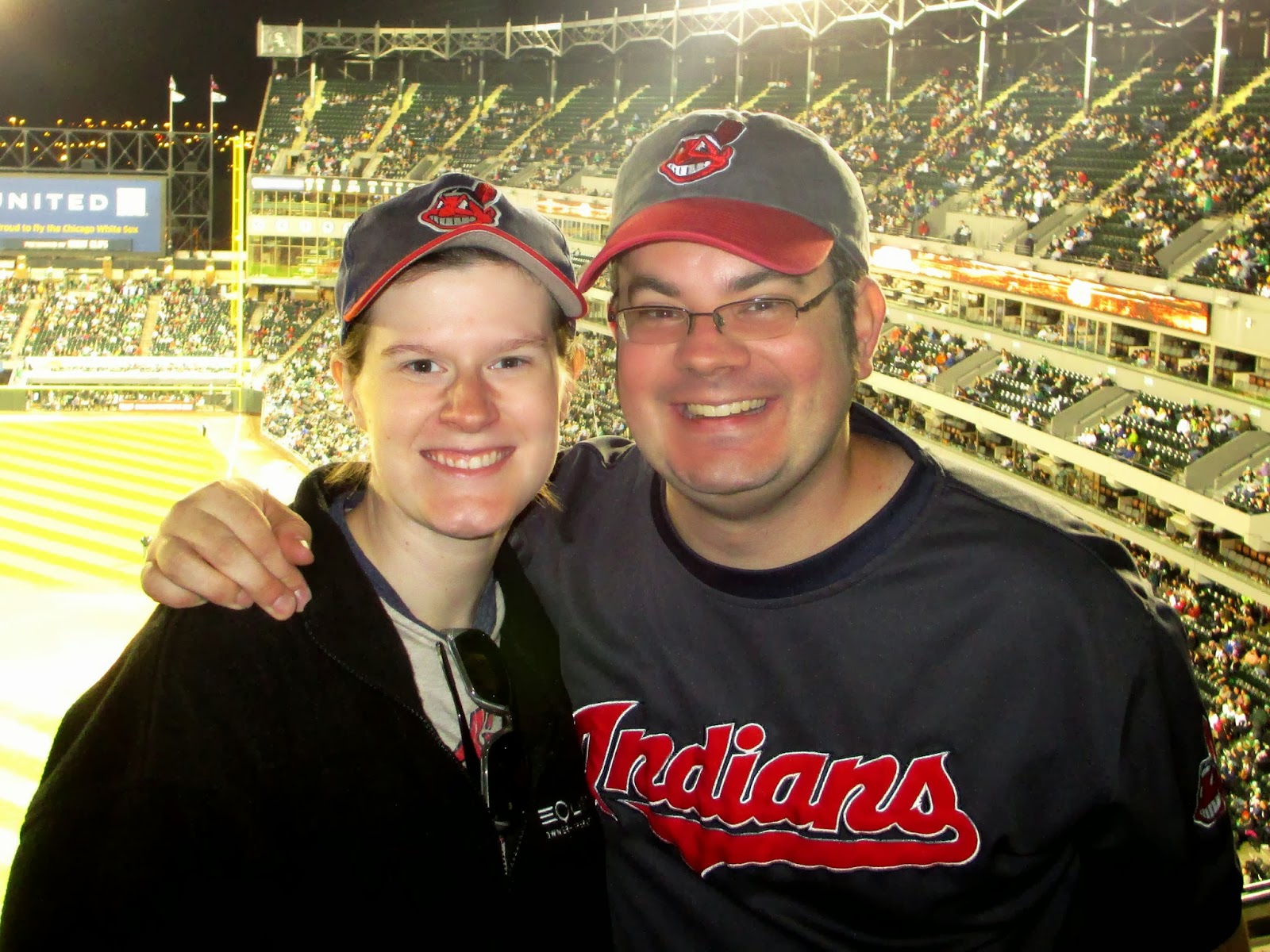
Wednesday, October 1, 2014

Why I don't like the renovations planned at Progressive Field

Recently the Cleveland Indians announced plans for renovations at Progressive Field which will significantly alter the look of the outfield sections of the park. Being a lifelong Tribe fan and a regular visitor to the ballpark, I obviously have an opinion on them, and, at least at this point, they're largely negative. And before you go on about "bigger problems in the world" and other related rants, just stop. I KNOW this isn't the world's single-most important problem. Heck, it isn't even my largest issue, but it's something I wanted to comment on as a fan of both the team and the ballpark.

Now, you should know that I absolutely love sports architecture. If I hadn't have gotten interested in music and education while I was in high school, I would've gone into architecture. I love seeing different stadiums and arenas and will try and visit the various ones when I go to different cities. I am particularly interested in the architecture of baseball parks because they can vary so much simply because unlike the rectangular playing surfaces of sports like basketball, football, hockey, and soccer, baseball fields can vary considerably from one park to another. Major League Baseball has minimum field dimensions, but that's it. A ball that is a deep flyout in one park is a home run in another. In my ultimate dream world, I'd attend a game at every Major League ballpark. So far, I've attended six (including Progressive Field), of which three are no longer used (two of those have been torn down). I've been to games at old Cleveland Stadium (torn down 1996), RFK Stadium in Washington, DC (no longer used for baseball), US Cellular Field and Wrigley Field in Chicago, and Cinergy Field in Cincinnati (torn down 2003). I have been outside of several other parks in addition to those, but haven't been inside for games.

In short, I am not very thrilled with the changes I am seeing, mostly from the aesthetic side. I really feel like they take away from the park's architectural aesthetic rather than enhance it like the other changes that have been made over the years. Progressive Field was a carefully designed park so it would fit in with downtown and give Cleveland a truly unique ballpark. The exposed steel is because of Cleveland's history in the steel industry; the vertical light towers mimic the smokestacks of the nearby factories. While Camden Yards in Baltimore ushered in a new era of ballpark design, Jacobs Field was the first ballpark in the retro-modern design (Camden Yards is what is known as retro-classical). Besides that I'm fairly neutral on the renovations. From a fan's standpoint, it seems I'm in some kind of minority now as someone who goes to a game and actually sits in my seat for most of the game. While socializing is always fun, I do so as I'm watching the game in my seat, not sitting at a table, especially a table out in the right field upper deck.

Current (2014) view of right field, taken September 23, 2014
Rendering from roughly the same angle. Note the absence of structures behind the right field seats, especially the bridge to the parking deck. The bridge is part of the aesthetic, even though I can't say I've ever used it. I also don't like how the mezzanine level (middle deck) is trimmed back considerably. In the design of the park, the mezzanine level matches the club seats in the shape of the section. Now you lose that, along with a whole lot of seats. The Indians said the seats lost in the upper deck could be uncovered if needed (unlikely that would happen even if needed), but if you remove parts of the deck, kind of hard to "add extra seats" back.
Renovation rendering of the right field mezzanine and upper deck. The layers look awful to me. Bulky and in complete contrast with the rest of the park (especially since all the seats are hunter green). The move of the bullpens creates an awkward seating section in the right field lower deck over where the visitors' bullpen currently is since the lower deck behind tight field is a few feet lower than the lower deck around the foul pole (see top picture for reference). The setup is quite visible here. It's probably the main reason the original architects decided to put the bullpen where they did to account for that change in height. You can see the full view of the drastically reduced mezzanine level too.

Closeup of the new bullpen setup, which will move both bullpens to right center and face them perpendicular to their current layout. The rationale was to bring fans "closer" to the players since the bullpens will be right at seat level. But really, players are conditioned to ignore fans and it's not like the bullpens now are significantly far away. About the only thing I actually like about this is the addition of a large Ohio flag with the American flag (the other flag on the right is the flag for the city of Cleveland). 

My biggest disappointment is what appears to be the imminent destruction of the Bob Feller Plaza beyond right center field along E. 9th St. When Progressive Field was being built, fans could buy a personalized brick (it seems to be more of a paving tile than a brick), and my family bought one for my late great-grandpa Wetzel, who was a huge Tribe fan his entire life and had passed away at age 88 just two years before the park opened. I do occasionally make a point to walk by it when I'm in that area. I was 10 when my great-grandpa passed away, so I remember him and seeing his name there always makes me smile. I would think that fans who paid the money for those expected them to be there for a long time and 20 years isn't a long time. I know I certainly expected them to always be there. From what I've read, they will now be moved to Gate A, which is located across from Quicken Loans Arena. I'm glad they'll be saved, but it appears that decision was made after the Indians got negative feedback from fans. Why didn't anyone foresee that?

What's somewhat comical to me are the comments from the Indians about giving "more dramatic" views of the skyline by removing the concession areas in right center field and apparently, the bridge connecting the parking garage to the right field stands. Uh, the taller buildings are obviously QUITE visible from there and the only additional views fans will get are of the the very small buildings across E. 9th from the field and the base of the large parking deck at Prospect and E. 9th. The more "dramatic" views are beyond left field, where the city's three tallest buildings are located. I have never looked out in right center field and thought "man, I wish I could see the bottoms of those buildings more!"

I was also disappointed with comments about ticket pricing: "The Indians are not planning any changes to their ticket price structure, but instead sought to, in Shapiro's words, "add value" to the current cost of a ticket." Huh? More value? What exactly does that mean? Because there will be some new tables to "socialize" at in right field or a two-story bar that I'll feel like I'm getting better value for my ticket? The new wifi, the entertainment (the game itself and other stuff), the up-to-date scoreboards, and the clean look of the park is enough value. None of these upgrades makes me feel like I'm getting more for my ticket since I don't hang out in the park's social areas or bars. No, the reason I don't come to more games is EXCLUSIVELY because of cost. There is no other reason, even the team's performance (though I will say them playing better is obviously a great motivator). I always check StubHub.com for tickets and will get anything below $20 that isn't stuck in the nosebleeds or out in the bleachers. I enjoy going to games, but I simply can't afford to go to a whole bunch of them.

What do I think the Indians need to do to improve attendance? It's simple: cut the cost for people to attend. I get that will eat into the profits, but if attendance is below 19,000 and you cut prices but attendance increases, is it really that much of a loss? One of the reasons minor league baseball is doing so well is because of cost. The Akron Rubber Ducks, the Indians AA affiliate, cut ticket costs this season and attendance is way up. Instead of a convoluted tier of ticket prices, for every game all reserved seats are $9, general admission are $5, and there is some kind of promotion every night. Yes, they did add "social areas" but those require different tickets ($17) and have less comfortable seats. There's even tons of free parking available adjacent to the park. Granted, Canal Park only seats about 8,000 people, but still, attendance is up. The Ducks did OK in the standings, but people come because they have an enjoyable time and it's affordable. A family of four can go to a game for under $50, including some concessions. Try bringing a family of four to a Major League game without spending $100 when you include tickets, concessions, and parking. Outside of the rare $10 bleacher seat specials, most tickets are at least $20. Removing close to 7,000 seats from what isn't exactly a huge ballpark means ticket prices will remain as is and could potentially even go up since all the seats being removed are the less expensive seats. I get why they want seats removed, but still, I don't like seeing massive reductions in seating like this because it further limits options and opportunities to attend. I felt the same way about the reductions at FirstEnergy Stadium earlier this year.

For some of these poorly attended weekday games, have a $10 Upper Deck seat special. See how many people come. The problem now is that the lowest-priced seats are the last ones sold, so unless there's a large crowd, the cheapest seats aren't even made available, so that likely discourages a lot of your budget-conscious and family fans from coming, unless they use things like StubHub to find better deals.

Of all the concessions, lower the cost of soft drinks too. Charging $6 or $7, even for a souvenir cup, is obscene. The fact that refills at Progressive Field require $2 more is even worse. Pop is SO cheap to make. Charging half that will still result in a large profit. Heck, even with the souvenir cup being $5 with unlimited refills, the reality is most people won't get a refill or will only get one, so the large profit is still there. The Indians said they lowered the cost of concessions for this season and they did, but it wasn't anything significant. Maybe a dollar less here or there. It's not like they suddenly became affordable. Oh, and stop punishing fans who make a last-minute decision to come to a game. It shouldn't cost MORE if I decide to but a ticket at the gate. All the ridiculous "convenience fees" attached to online sales negate any alleged "savings" with buying early anyway. Seriously, if it wasn't for StubHub, I probably wouldn't ever go to games I wasn't singing at. With StubHub, I'm able to find tickets around $10 each for the first row of the upper deck behind home plate. I even found a lower deck seat several rows behind the Indians dugout earlier this season for less than $18. Normally those tickets are $44 with the row in front of where I was sitting priced at $72.

When I went to Wrigley Field in July, I found that the Cubs have a contract with a nearby parking lot to allow fans to park there for free. FOR FREE! IN CHICAGO! They then have a FREE shuttle to and from Wrigley. That alone saved me $10 I would normally spend in Cleveland on parking, and the close to $20 I likely would've spent in Chicago on parking. Across town at US Cellular Field, many restaurants offer free parking and free shuttles to White Sox games. The place we ate at even had free valet parking and it wasn't contingent on you eating there either (though we did). Stuff like that (particularly the Cubs free lot) tells me as a fan that they value ALL of us, not just the season ticket holders, not just the suite holders. They are doing what they can to encourage fans to come and to promote local businesses.

Perhaps the Tribe could have an arrangement with Cleveland State or some of the lots by FirstEnergy Stadium. That in itself would be a huge gesture. As a fan, it seems like anything the Indians do as a convenience involves some kind of extra charge. As of now, the Indians have a "Tribe Park and Ride" that goes to four nearby suburbs and costs $5. I think that's a good thing (cheaper than driving and parking), but is greatly limited in both capacity and availability (only for certain games...not an everyday thing). It also limits mobility of fans since you can't leave early if you want/need to. For fans like me, the four suburbs they go to would require just as long a drive as going downtown, so there's very little incentive to save $5 by parking there. The Cubs shuttle is just done with school buses (which are air conditioned) and during the game they still ran them as needed, so you weren't stuck at Wrigley if you wanted or needed to leave early.

During the All-Star Voting, the Indians' Corey Kluber was one of the last ones we could vote for, so the Indians teamed up with the Colorado Rockies to cross-promote their players (Justin Morneau for the Rockies). I voted online for both of them and a few days later I got an email from the Rockies thanking me for the vote and offering me a 33% discount to buy tickets. Did I get any email from the Indians? Nope. If I had, I would've most definitely used it. If I lived closer to Denver, I probably would've used the discount. I wonder how many more people would've been motivated to come to an Indians game if they had gotten an email like that?

For a few years in the early part of the 2010s, I was part of the Tribe Fan Club. Each year I paid a $20 fee and I got a membership card and a bunch of benefits. One year I got two free tickets to watch batting practice from the field, and the next year I got two free tickets to tour the ballpark. Additionally, both seasons I could pick a game and I got two free tickets in the lower deck. That alone made the club worth it and was the reason I did it, but added with the other perks it was a huge value. I think in 2012, though, they stopped doing the free game tickets, so I stopped doing the club since it once again offered a free tour of the ballpark (I didn't need to do it again one year later) but very little besides a 10% discount at the team shop. Looking at the website now, it looks like it's not even offered anymore.

I get that I'm not a big-money person who's going to bring tons of money into the park when I visit, but for once, I just wish that professional sports wouldn't just cater to the "haves" in the world. Yes, they need to make money, so I'm hardly calling for free admission and free concessions, but let's keep it reasonable. The fact that the Indians are consistently doing well in the TV ratings department means there is significant local interest in the team, but that isn't translating into more people coming. I don't think it's because they don't have a designated "social area" at the park or because the concourse is too dark (try walking the ancient concourses at Wrigley!), it's because of cost and the feeling that they can't get too attached to the players because they'll end up traded or otherwise leaving in a few years. Please spare me the Major League averages too. Those are completely irrelevant since that average includes your high-priced areas like New York and Los Angeles. What matters is how the prices work for THIS market. It frustrates me to no end when the people complaining the most about attendance are the journalists who are PAID to be at the games, just like an executive talking about "value" in a ticket. When was the last time an Indians executive paid for a ticket?

I love the Tribe. Of the major sports franchises in Cleveland, they are easily my favorite, not only because I love baseball, but because they are the only one I have real access to (and are so far the only one to have me sing the National Anthem!). I go to several Indians games per year. While I now work for the Browns, I still have never been to a game as a fan (have only been to two college games ever at FirstEnergy Stadium). My last Cavs game was in 2011 and before that, the only Cavs games I had been to were two road games in Salt Lake City when I lived in Idaho for school and a game way back in 1998 that my dad got company tickets for. I also love Progressive Field and feel like many of these "upgrades" are butchering the carefully planned aesthetics of the park for short-term and shortsighted changes that do nothing to enhance my experience at Indians games. In essence, we'll now have the world's largest minor-league baseball park. Right now, it just seems like the Indians aren't too keen on really understanding their market and are far more concerned with making a buck here or there than making fans feel like they're valued, regardless of whether they're in the "cheap seats" or the suites. It frustrates me to watch this happen and I honestly left my last visit to Progressive Field more frustrated than ever, and it had nothing to do with the score of the game. I was just another, unimportant "fan" sitting it the upper deck who was of no consequence. The only thing anyone in that park cared about was what I spent money on.

Monday, March 31, 2014

The Least of These

"Verily I say unto you, Inasmuch as ye have done it unto one of the least of these my brethren, ye have done it unto me." (Matthew 25:40)

The last few weeks, this verse has been on my mind a lot, along with the overall concept it's talking about. Whether you're religious or not, the message is the same: how we treat those who we view as being of little consequence reflects on our true character.

I would venture to say we've all had experiences where we've been treated poorly by someone because they didn't consider us important. I've certainly had my share of those experiences and continue to do so. The last few weeks it seems I've had quite a few. Obviously, I'm someone who falls into the category of "the least of these my brethren". I'm not famous, I don't have a lot of money, and outside my circle of friends and family, I'm an unknown. 99.9999% of the people who meet me have no idea who I am and likely won't ever interact with me again.

Two instances earlier this month really had this on my mind. I had the opportunity to sing the National Anthem for the Mid-American Conference Wrestling Championship as it was hosted by Kent State at the MAC Center. Prior to the meet, I was aware that one of the coaches for a fellow conference member school knows a family member who works at that school, so I figured I'd introduce myself. It ended up that there were actually two coaches that knew this family member, so I met both of them and had two completely different experiences.

Getting ready to sing and then singing at day 1 of the Mid-American Conference Wrestling Tournament, hosted by Kent State the second weekend of March. I ended up singing for three wrestling meets this season!


The first coach, I caught just after a match for one of his wrestlers, so I guess he was too focused on that or the adeneline was still flowing or something. Even so, I introduced myself and walked with him and asked if he knew my family member. He replied "yeah" and then I said something to the effect of "I saw that you all were coming that you knew [my family member] so I figured I'd say hello." His reply as he kept moving was "yeah, yeah," and he walked away. OK... Obviously, I wasn't someone of importance to this coach, even enough to give a minute to. My family member said this coach was very intense and focused and didn't take time to "chat", but it still had me thinking. I really don't care how "intense" or "focused" you are. It doesn't take a massive amount of effort to acknowledge someone and be polite even if you're rushed or really can't talk. A simple "it's nice to meet you" would suffice. If the person can't take a hint, "excuse me, I have to run, but nice to meet you" works. I was simply blown off, made all the worse by having previously observed him conversing quite cordially to those he knew better. So yeah, since I wasn't someone he knew and clearly wasn't someone "of consequence", no need to take any time to be polite. Not impressed. I remember thinking I was definitely the "least of these". Was he outright rude? No, but I know when I'm totally being blown off by someone.

Conversely, the next day (I sang both days of the tournament), I met one of the other coaches from the same school. This coach also knew my family member. Now, I recognize that in this meeting, I was standing on the floor getting ready to sing (whereas the day before I met the other coach in the lobby a good hour after I sang) and it was before play started (so nothing to distract him), but still, a much better meeting with this other coach. He took the time to acknowledge me and even "chat" a bit, especially once he realized the connection we had through my family member. We conversed no longer than two minutes. I was of the same "consequence" to him as the other, but what a difference.

I had some other experiences earlier in the month when I attended the Arnold Sports Festival Expo in Columbus. While there, I had the chance to meet some of the people I follow on social media. Now, I've mentioned a few of them in an earlier post and that while I follow them, I hardly elevate them to some kind of super-being. I also have some kind of standards for following, so I've continued to follow as I've seen their posts because they are largely positive, real, and if we somehow interact, it's also positive. As cool as that is, though, meeting in person is a completely different element to social media. Social media can give you a sense of how someone really is, but obviously, people can put on a facade. Granted, meeting in person briefly doesn't exactly give you a total glimpse of their character, but if they're willing to interact with fans in a positive way, that's a pretty good start and a lot better than most. Meeting in person is an important element to me. Social media is great and all, but face-to-face interaction is far more meaningful and important to me, especially for those I interact with more regularly. I realize that's not always possible with some of the more famous celebrities I follow (like professional athletes), nor would I ever expect a large amount of time, but for the vast majority of people, it's not out of the realm of possibility to meet briefly, whether it be in situations like the Arnold Expo, or I happen to be in the same town as that person due to travels and we do little more than converse for a minute or two and shake hands.

Those I met in Columbus thankfully did not disappoint. They all seemed very genuinely good people who appreciated the support of their fans, and heck, a few of them even recognized me from social media (mostly Instagram) interactions. Considering it was a day before my birthday, those little things made my day and really made the weekend a special one for me at a time when a lot isn't going as planned in my life, so it was very much appreciated!

The first place I went once I got to the Arnold Expo was I waited about 20 minutes to get into the Beast Nutrition booth since four of the people I followed were there. First guy I met was Greg Clausen...if I look short it's because he's 7'0. Great guy! I had seen some stuff about him well over a year ago and vaguely knew about him last year when he competed in one of the fitness competitions at the Arnold. I briefly saw him from a distance right after he competed last year and have a random picture, but I couldn't even remember his name. This year, though, mostly through Instagram, but also Twitter and Facebook, I've interacted a few times, so he even recognized me slightly. Heck, I even got a free t-shirt out of it! Score! I enjoy following Greg's social media posts because he mixes in a lot of humorous posts with those related to fitness and working out, plus he's not all about just pushing his product all the time. It's important to laugh, so I really appreciate those! Check him out on Instagram: @7footphysique; on Facebook: The 7 Foot Physique Competitor; and on Twitter: @7footbodybuilder
Next I met Amber Orton and her fiancee Brandan Fokken. I started following Brandan after following Greg, and then that led to Amber (Amber and Brandan are engaged...you may have seen a meme they're featured in...), mostly through Instagram for both, and now Twitter too, and Facebook for Brandan (who manages three Facebook pages!). Both have been very friendly via Instagram and they knew who I was based on some of the comments I had made recently. Brandan even knew that my birthday was the next day. Again, small things that made the day a little more special. Like Greg, Amber and Brandan have a lot of humorous posts they share on social media that make me smile, plus they often post recipe ideas for people who may be looking to make changes in their diet. In other words, they make fitness seem like something that's attainable for us mere mortals :). Bonus points: I saw Brandan just before I left at the end of the day while everyone was packing up to leave and shook his hand and thanked him again. Again, very cordial and he wished me a happy birthday again. Class! Check them out on Instagram: @brandanfokken and @mishkadawn; on Twitter: @BrandanFokken and @amberdawnorton; and on Facebook: Team Bodybuilding.com Athlete Brandan Fokken and Amber Dawn Orton- National Level Bikini Competitor/Fitness Model  

After going to the Blue Jackets game, I came back to the Beast booth and got a picture with Tobias Konechne, another great guy who I had been following on Instagram because of his connections with Greg Clausen, Brandan Fokken, and Amber Orton. Tobias was just kind of out in the booth (the others were behind tables), so it was easier for me to steal in and get a photo without having to wait in line again (the line to the Beast booth was long all day). Tobias isn't a super-active Instagram poster, but that's because he's pretty busy not only with his career, but his family too, which I think is awesome! Always happy to see dads who are proud of their kids! Check him out on Instagram: @tobiaskocnechne and on Twitter: @TobiasKonechne

Rob Bailey's booth for Flag Nor Fail literally had huge lines leading to it the entire day (mostly to get pictures with him and his wife Dana Linn), so I avoided it as long as I could. By the end of the day, though, it was either now or never and the line had died down a bit, so I figured I might as well! Just before I was near the front, Rob came around and personally talked with and greeted every person in line and thanked them for coming, so I was able to get this picture. It was a really nice gesture, especially considering how long they'd been working that day and that weekend. Soon after that I got a picture with the lovely Dana Linn Bailey (below). They both might look super tough and unapproachable, but the opposite was true. Not only are they grateful for the support, but they're genuinely nice and seemed to be really fun people; people that are easy to support. Look them up on Facebook: FLAG NOR FAIL; Instagram: @flagnorfail and @danalinnbailey; and on Twitter: @flagnorfail and @daydayKnucks

In the end, I strive as much as I can to treat people like I want to be treated, so I value when others follow the same Golden Rule. It sounds so simplistic, but really, so many problems in the world would be solved if people just thought about how their actions affect others and acted accordingly. Thanks to those I interact with, no matter where you are in life, who treat me with respect, but overall are just nice to me. Whether because of your belief in God, Karma, and/or you just want to be a nice person, how you treat the "least of these" is a reflection on your true character, not how you treat those you know or know of.

Sunday, February 2, 2014

You didn't build that, or did you?

It's no secret that I'm in the market for a better job and have been for some time. Anyone who knows me personally knows that it's been a very long and frustrating process, full of what seem like endless job applications, resumes sent out, and little, if any response despite the experience I bring and my education. As this has dragged on, I've thought a lot about how people "make it" and are successful, plus I see a lot of "inspirational" posts from various people I either know or follow on my various social media accounts. And this is dealing with success in some type of occupation or career, not for something like losing weight, working out, forming new habits, etc.

First off, though, what is the definition of "successful"? I think when most people say "successful" they are talking in terms of finances. In other words, a successful person is someone who has a well-paying job or is otherwise well-off financially. At the very least they are financially independent. While I don't disagree with that definition, I am reminded of the quote from LDS President David O. McKay: "No outside success can compensate for failure in the home." In other words, while being financially well-off is certainly a worthwhile goal, if by doing so we sacrifice meaningful relationships (especially our own family) and/or compromise our morals and values to attain it, can we truly be "successful"? That in itself could probably take its own blog post. Suffice it to say, I would have a hard time considering myself successful even with all the money in the world if I didn't have my family. 

Moving on, the most common themes on these "inspirational" posts I see on social media are hard work, diligence, and perseverance, related, of course, to setting goals. While I certainly don't discount the importance of those things, do they in themselves make someone successful? No, they don't. Yeah, you heard me right. I know plenty of people who, like myself, have done everything they are supposed to do yet struggle to gain any type of recognition for their talents and abilities. It has little to do with a lack of hard work, diligence, or perseverance. Now, these inspirational stories or pictures will often make it sound like the person who posted them is successful because of those very things (i.e. their own efforts only), yet when you read their stories, something else comes up: someone else gave them a chance, i.e. simply noticed them. In other words, part of their success was being in the right place at the right time. 

Whoa, whoa, whoa, wait. So you mean their success can be attributed to someone else? Yep, at least partially. Again, the hard work, diligence, and perseverance certainly put them in a position to be successful and to sustain their success, but by themselves did not make that person successful. You can be the best teacher in the world, but if no district ever looks past what they see on your resume or even bothers to read it or give you an interview, guess what? You're still on the outside looking in. Even for entrepreneurs, you can have the best idea ever, but unless other people buy it and tell others, you're no better off than before. You cannot attain success alone, at least in terms of a career. 

I've seen that in my own life, aside from the job search. As many know, I love to sing the National Anthem for sporting events and have been doing so for almost 20 years now. People frequently ask how I get those gigs, especially when I sing for professional sports teams like the Cleveland Indians and Lake Erie Monsters. The answer is simple: for most teams I initially sent them a CD with a recording of me singing. Over the years I've had recordings done of performances at various venues that I put those on YouTube, so now I simply send teams a resume of my performance experience and the web address for my YouTube page. Last year I created a National Anthem page to refer people to, which includes all of those things: my performance experience, audio recordings, and video recordings. 

But you know what? Sending all that out only goes as far as the people who receive it. While I have been fortunate to sing for the Indians and several other minor league teams, it's because the person in charge at each place has liked what they heard and contacted me to song. For reasons I don't know, I have yet to sing for the Cleveland Cavaliers and a host of other major league teams I send stuff to every year. For instance, I recently sent materials to another Major League Baseball team and received a reply that in order to even be considered for the anthem, I have to join one a group that is connected with group ticket sales and then go through that group's contact with the team. For someone like me not based in that area (but frequently there for family and only 5 hours away), it makes it somewhat difficult to commit to something like that. It's certainly not based at all on my talents, abilities, and experience with the anthem.

So yes, I have set myself up to be successful in that regard, but unless someone says "hey, we want you to sing for us", I'm really no further along than I was before I sent it out. I consider what I'm doing as creating opportunities for myself; putting myself in the position to receive them, but in the end, whether I perform or not isn't in my power. I do much the same with Kent State: I noticed they often didn't have a singer for the anthem, so I got in touch with the person in charge, and boom. When a new person comes in (which happens every few years), I have to start all over again. But again, it's a two-way street. It's not JUST because of me, it's because the person in charge considers me someone they like to have sing for them. 

When President Obama made his comments about "you didn't build that", I think this is the idea he was getting at, even though I wasn't all that impressed with how he worded it nor the seeming emphasis he placed on others in our various paths to success. Yes, we do need to do a lot on our own to be successful. Like I said, hard work, setting goals, persevering, all those things, are key steps in helping us be successful and even more so for sustaining success. But yes, at some point, you do need someone else, whether they be an employer, an agent, or even a customer, (or for me and singing the anthem, usually an intern!) to help you go beyond potential to reality and success. I think it's very disingenuous for people who are successful to ignore the roles that others (including, for those of us who are religious, God) have played in their success and just focus on what the individual has done. That's not to underscore what the individual has done or undermine it in any way, but to be realistic. Again, ask any "successful" person how they achieved success, and at some point along the way, there will be an event where someone else took notice and decided to take a chance on them.

Let's keep it real. Who knows, maybe you hold the key to helping others achieve success too?

Saturday, February 1, 2014

Why Franklin?

On Thursday, news broke that the Kent City School District plans to close one of its five elementary schools at the end of the current school year because of enrollment declines. While no specific school has been officially announced, the article indicated that some people believe it will be Franklin Elementary School. I also believe Franklin will be the one closed and am not surprised for a number of reasons. An article on Friday, January 31st, however, made it sound as if Franklin (and the former Central Elementary School) closing is a done deal, even while board members insist no formal decision has been made.

Let me start out by saying this blog should not be construed as an endorsement of closing any of the schools or advocating for one school or the other to close. I'm simply looking at the "why"s and answering them to help people understand the situation better and move beyond the simple emotional aspect of the situation. If people really want to potentially stop this closure, saying things like "Franklin is the best!" and "I love Franklin!!" may sound nice, but they aren't going to sway any votes. We all need to understand the facts, so we can argue facts with facts, particularly the economics of the situation. While I did not attend Franklin as a student, I have worked there multiple times as a substitute over 3 years (so am familiar with the students and faculty), plus I know how upsetting it would be to me to have one of my schools close, especially if I were still a student there. That said, from an enrollment standpoint, which seems to be the main driver here, the district is completely justified in closing an elementary school. Kent simply does not have enough elementary-aged students to warrant spending money on five buildings when we have the student body that could fit in four, even three.

My concern as an alumnus of the district and now as a resident is how this has come about. Even in being, what I consider, justified in terms of enrollment (Kent does not need five elementary schools with the current enrollment), I feel the way the news has broken and the seeming disagreement in statements about whether or not it's Franklin, looks really bad and reflects poorly on the Board of Education. Voters in Kent just passed another school levy this past May that is due to generate $4.25 million in additional funds. Yes, that money has not yet come to the district, but it is coming, on top of the local tax money the district already receives. Kent has the highest property tax rates in the county and is among the highest in the area. Levies are hardly ever (if ever) voted down here. The schools are supported very well by residents and have been for pretty much ever. Announcing cuts, no matter how legitimate the reasons, so soon after a levy approval like that just does not look good.  I hope it spurs more residents, whether they have kids in the schools or not, to be more involved and to really analyze how the district does business rather than simply assuming the best and basically writing blank checks all the time. Kent does a lot of things very well, but it could definitely use improvement in other areas.

Enrollment

Why the decline in elementary students? The district speculates the rise in rental housing, which is heavily related to the growth of Kent State University. The population of the city of Kent is higher than it has ever been in its history and is growing (along with Franklin Township), yet the school district has been declining. While I think the conversion of family housing to rentals is part of that, it's not the entire reason. I believe Kent has a lot of empty-nesters who have remained here. Nothing wrong with that (generally means they like it here and see no reason to leave), but it's going to have the obvious effect of lowering the student body. The neighborhood my Ridinger grandparents live in just east of KSU is a prime example. My dad remembers the neighborhood being full of kids, but now, and for the last 10-20 years, it has far more senior citizens and retired couples than it does kids as the kids have grown up and moved on. My grandparents themselves are part of that. Add that to the fact that Kent has had very little construction in the way of family housing (i.e. housing developments), and there you go. The neighborhood I grew up in also had that to a degree, and I've seen that here in the neighborhood I live in now in Kent.

Another valid point that I've seen others raise is the issue of taxes. While there hasn't been a whole lot of new housing available for families in Kent, I know of at least a few who have either decided they can't afford to live here because of the property taxes, or nearly didn't buy their house in Kent because of the high property taxes. In other words, in our desire to fund our schools well, we may be pricing out many of the very people the great programs the schools offer are designed to help the most. Of course, there hasn't been a formal study by the city or district (all anecdotal observations) as to exactly why and there are likely other factors too, but in the end, the result is we have far less elementary-aged students now than we did 10 and 20 years ago and the numbers have been declining for some time. Each elementary school outside Davey (which houses all preschoolers, so has a larger enrollment), has about 200 students. Franklin itself only has 192 this year. I'm not sure the capacities of each elementary school, but my guess is they are optimal around 350 student each (in the early 1990s, Walls had as many as 495 one year), give or take a few. Davey is the exception since it is a former high school and middle school, so it obviously has a larger capacity, probably around 600. As a junior high it had around 800 students, though it was crowded.

Facilities

September 7, 1922 Kent Tribune announcing the opening of Franklin
OK, so why has Franklin been targeted to close? Simple economics. From a facilities standpoint, Franklin is old and the older a building gets, the more expensive it becomes to maintain. The original portion of the building opened September 11, 1922, just 5 days after the original portion of Davey Elementary School opened as Roosevelt High School. Franklin has two additions, one on either side of the original building. As far as I have been able to find, both additions were built at the same time and were built in the 1950s prior to the merger between the Kent City and Franklin Local School Districts in 1959. There have been no major renovations to the building in the last few decades that I am aware of.

While Davey is an older building (at least the original part...it also has an addition that opened in 1967), it was heavily renovated in 1999-2000 as part of its conversion from a middle school to an elementary school, so much of it is newer than any other Kent school building, even Stanton Middle School (opened August 1999). That's on top of the historical and sentimental values attached to that building, which has served as a high school and middle school before being an elementary school. The other three Kent elementary schools are as follows, from oldest to youngest:
1. Longcoy, opened 1957 with additions in 1965 and the mid 1980s
2. Holden, opened in 1965
3. Walls, opened in 1966 with an addition in the early 1970s

This is not to say that Franklin is being targeted simply because it's old or that it's in terrible shape, because it isn't. But compared to the other elementary schools in the district, it is in the worst shape and is likely more expensive to maintain.

Accessibility

Anyone who has even been in Franklin knows its other shortcoming as a facility: accessibility. The entire building, both the original and the additions, was built long before any kind of handicap accessibility standards were in place. While there are three listed floors, in reality there are four levels connected only by staircases, most of which are small and narrow. The building has a somewhat confusing layout too because of the topography of the site. For instance, when you enter to go into the office or the gym, you are on what is considered the second floor even though it is ground level. Just outside the office is a staircase going to the rest of the second floor. The first floor is really the basement (accessible from the "upper" part of the second floor) and then there is a third level. The other four elementary buildings are either one floor (Longcoy has some stairs in the back of the building to a higher part of the same floor, but the rest of the building largely accessible) or have elevators (Davey has an elevator added during its renovation).

So yes, from a facilities and accessibility standpoint, eliminating Franklin makes financial sense since keeping it would result in extensive renovation to bring it up to code or total replacement. In a recent community survey, the district indicated that Franklin needed heavy renovation or replacement, and some in the district suggested simply closing Franklin instead. If enrollment would increase over the years and a new building needed, a new building would have to be built anyway. This will put it off until needed, if ever.

Location

Another thing working against Franklin is its location. Franklin is located on SR 43 just north of Roosevelt High School. It is the only Kent elementary school on a major road and is the only one not in the middle of a residential neighborhood, which is due to its history as the centralized township school. Yes, it's not completely isolated from residential areas (northern Kent, with the Riverbend subdivision adjacent to it), but compared to the other schools, it's far more isolated. Neighborhood elementary schools are best in residential areas on side streets since they have very young children walking to school and crossing streets. On top of that, the territory that Franklin serves is the largest in terms of land size, so it wouldn't surprise me if Franklin has the largest percentage of students who are bused or otherwise driven to school (a lot of parents drive their kids to school I noticed). That's significant because in closing a school, all costs are weighed. If closing one school means busing a whole bunch of kids who weren't previously bused, it may end up not creating the savings the district was hoping for. Since most Franklin kids are already bused, it would result in minimal increases in transportation costs. Even the kids that do currently walk could be picked up on by the existing routes on their way to whichever school they are going to.

Holden Elementary School, located on West School Street
The only other elementary school with a location similar to Franklin is Holden, but Holden is in a much more densely populated area (a smaller territory), so a large number, if not the majority, of the students walk to school. In fact, all of Holden's territory is less than a mile from the school as the crow flies. It is also not directly on a major road, though it is just a few hundred feet from South Water Street (SR 43). If Holden was closed, the entire student body would have to be bused to Walls, Davey, and/or Longcoy, a student body that previously wasn't bused. Bear in mind too that Holden is the closest school to the Kent City Schools' bus garage. And, of course, the building is newer than Franklin and is one floor.

The other thing with Holden is that it's much more embedded as a part of its neighborhood than Franklin is, at least from my experience at both schools and what I know about each school's history. Holden is the school for what is known as the South End (or the South Side), an area that has some of the highest poverty rates in the city, but is also a fairly close-knit, racially diverse, blue collar neighborhood. Holden is the successor of South School, which dates back to a wooden frame building in 1869 and a later building that stood from 1880-1966. It was the first "neighborhood" elementary school in Kent, formed later in the year that Kent's first centralized school (the Union School) opened. While Franklin dates to 1922 as a consolidation of the township's school houses, it did not become a Kent elementary school until 1959, and since at least 1966 has not served the entire township. That's not to say it isn't a community in itself, but of all the schools in Kent, Holden has always been the one that seemed to have the deepest ties to its neighborhood.

End results

If Franklin does end up getting closed, I see the student body getting divided between Walls and Davey most likely, then possibly other adjustments in the boundaries with Longcoy and Holden to balance the buildings out a bit. Walls already has a large section of Franklin Township in its territory (I grew up in the township and went to Walls). If needed, the district could also open up space at Davey by moving some of the preschool classes to other elementary schools instead of having all of them together. In reality, Walls could absorb the entire enrollment of Franklin and still have less students than when I was in school there. During my 5th grade year, Walls had 495 students in grades K-5. We had so many students that some had to be moved to Franklin my 5th grade year, plus we did not have a music or an art room. If Walls and Franklin were combined today, it would create a school of not even 400 students. When I subbed at Walls last in 2012, there were several classrooms that weren't being used at all (yet the school still has a modular unit out back!). Now, I don't think the district will actually do that; it's more to illustrate that having five schools isn't really needed. I can, however, see a scenario where the majority of Franklin students end up at Walls while others end up at Davey. I would hope the district goes the route that provides minimal disruption. If the boundaries are changed for all the remaining schools, that's going to be a lot of disruption for more than just the Franklin kids.

The former Emma Williard School at the corner of Brady Lake and Lake
Rockwell Roads near Brady Lake. It closed in 1978 and has been largely
vacant since then. Several projects have been proposed, but none have
come to fruition. 
I don't see large-scale layoffs. Most of the faculty and staff will likely relocate to the new schools with the kids. It won't simply be a case of adding all the students coming from Franklin to existing classrooms without additional teachers. Those who retire likely won't get replaced, though. I could see the loss of some administrative jobs (like the principal of Franklin), but that will depend on any retirements or departures that may come up at the other schools or in other districts. I do think the district will do what it can to minimize layoffs, if they happen at all, and there is enough time for people to be looking for other work if they think they may get laid off.

From a historical standpoint, I also hope that the Franklin building can find a use beyond a school. It is over 90 years old and is part of the community's history, so I would hate to see it torn down. Even so, finding new purposes for schools can often be difficult for a number of reasons. The former Emma Williard Elementary School in the Brady Lake area, closed in 1978, still stands and has been vacant since its closure. The issue is simply the cost of converting it to other uses. Schools can be converted to other uses, but they need someone who has a lot of money and a love of history. We've seen some former elementary schools find new life, others abandoned, and others torn down. There are so many factors.

Saturday, January 25, 2014

Journaling

Anyone who follows me on Facebook, Twitter, or Instagram may have seen my recent photo and post about my journaling. I have been keeping a journal since I was 8 years old, but only since I was 19 have I really kept it on a consistent basis. Recently, I saw a blog post from someone who had been journaling for about a year that offered some great tips for those who maybe aren't sure where to start, including a template to follow. I think the suggestions are great and if you do a web search, you can find all sorts of tips and suggestions for those interested. I thought, though, that I'd share some of my own experience, habits, and what works for me and why. It's not to show off, but hopefully to help anyone who is interested!

Background
My Derby grandparents (big into family history) got me my first journal for Christmas in 1990 when I was 8. It was the 6.5x8" size and had a royal blue cover with my name embossed on the bottom right. At that age I had no idea what to write in it, and I remember my mom telling me I should write what I felt about things. My entries in that first journal were quite sporadic. "What I felt" often was as simple as "I feel great", but I did mention what was doing. It carried me up until I was 19. The first entries of my mission were in that book too. I would occasionally put little mementos in it too. Some things I remember were a $2 bill and the ticket to General Conference the first year the Conference Center was open in 2000, and for awhile I had a 4-leaf clover I found in our yard.

Thinking about that first journal always makes me sad, though, because I lost it. Well, more I had it stolen. The very first night I was in Tucson at the beginning of my mission, most of my luggage was stolen, including the suitcase that had that journal in it. I shudder when I think of what happened to it since whoever stole my stuff (and all the other new missionaries' stuff) probably threw it away. I only had a few pages left in it too and had just started getting more consistent in my journal writing as my mission had started. That journal and the Christmas stocking that my Grandma Ridinger made for me when I was born were both lost and were the hardest things to lose for me since I'm a sentimental person. Every Christmas I'm reminded of that because my Grandma made me a new stocking after I got home in 2003.

Anyway, I got new journals and started writing every few days. Soon, though, I was watching a video about early Church History (Mountain of the Lord) that features Wilford Woodruff, 4th president of the Church. He was a prolific journal writer. In the video, a dramatic recreation of the dedication of the Salt Lake Temple in 1893, Woodruff makes a statement to a reporter who is writing about the temple dedication that he made sure not to retire each night until he made a record of the day. For whatever reason, that stuck with me and made an impression. I wanted to have a record of each day and what was going on in my life and what I was thinking, not only for me, but for any posterity. From then on, I almost always wrote every day. In the instances I couldn't write, I usually wrote the next night and wrote about both days.

That continued almost unabated until 2007, when I started getting sporadic, which corresponded with the beginning of a less than spectacular part of my life, but also the beginning of my blogging. I have dated pages but nothing else written, but have blog posts that fill in the gap somewhat. Eventually, journaling came to a grinding halt. Where most volumes of my journal cover a little less than a year each (200 or so pages), Volume 13 covers a period of 5 years and 2008 is completely absent. I wrote in December 2007 and the next entry is March 2009. I only made 2 entries in 2009 (one more in May) and then not again until May 2010. I tried to restart it in 2010 with very limited success. 2011 was similar. I went through a period of about 2 months where I was writing regularly again, but then it stopped again with a gap between March and December 2011. 2012 was when I finally restarted every day as a New Year's Resolution, starting right off with January 1. It's gone on pretty much non-stop since then.

Blogging
When I had stopped writing in my journal and started doing more blogging I did consider just doing all my journal writing on the computer. In the end, I decided not to because I liked being able to be away from the computer for a little bit and having something that was written with my actual handwriting as opposed to just typed. The downside is that it's hard to index since it's all handwritten.  At some point I would like to transcribe the entire thing onto the computer so it can be indexed and I can add pictures and footnotes as needed, not to mention have a another copy of it somewhere (I use a cloud service, so I wouldn't worry about losing it with the computer). Even so, I continue to write it by hand. It's also worth noting that my blogging decreased noticeably once I started writing in my journal more.

Journal size
All of my journals...currently in Volume 17. Volume 1 is missing. The blank 
one in front of 2 is a journal I got as a kid (after my first journal) that I never
used as I found it in my things only recently. There is no significance to the 
colors.  My Missionary Journal on the left has things written by others on 
my mission.
Earlier this year I switched from the 6.5x8" sized journals to the 8.5x11" size, purely by accident. LDS Church Distribution stopped producing the journals that I had been using for years, so I had to look elsewhere to find new ones. I found some at Deseret Book that I liked and ordered them, but nowhere did it say what size they were. Well, they were the 8.5x11" size and I got two. In the smaller journals, I always filled at least a page per day. I figured with these larger pages that wouldn't be the case, but it largely has been. Very few pages aren't full. Anyone who knows me isn't surprised ONE BIT!

Content
So what do I write about? I really don't have a template or pattern as far as content goes. Some days are very much logs of what happened, while others are much more focused on my thoughts and feelings at the time. That's why I write every day, so I have a snapshot of my life right then. Every day there is at least some mention of what I did, though. I've noticed when I have periods where the days are very similar (which happens in the summer when I'm usually not working), I do focus more on what I'm thinking, which makes sense since I have more time to think (or overthink...).  My Grandma Derby (who got me my first journal) also keeps a daily journal, though hers tends to be much more of a log and is far less detailed than mine. She does hers on the computer, but just to print it out and keep in a notebook.

The important things are first, to make it YOU. What do YOU want to remember? What do you want your eventual posterity to remember or read about you? I think about that whenever I write, almost like I'm writing it for someone else as much as I'm writing it for me. On that note, though, it's also very therapeutic and helps me process the events of the day to write about them, especially if I'm frustrated. Sometimes I need to vent frustrations that cannot be done here on this public blog or even on my private blog.

Next is to make it a habit. I write every day because I know that I probably won't be consistent otherwise, plus I'm a details person. Others may find it easier to write every few days depending on what they want to include in their entries. I keep my current journal right on my desk so I see it and I have the pens I use for it (see below about my pens...). Because I like to write before midnight (again, see below), it's also a habit that I automatically need to get the journal before midnight. That took some mental stamina at the beginning and making it a priority, similar to scripture study for many of us. Really, though, once you get through about 2 weeks of that, it will become a habit. Having everything right there as a reminder, though, is a huge help too.

Here are some of my preferences:
  1. I use Pilot G2 gel pens to write. I prefer the blue and black "extra fine" (0.5mm) point, but also use the fine (0.7mm) point. I use that brand because I like how they look and are good for archival purposes. In other words, they won't fade. I use the size just because it looks cleaner when I write as opposed to the medium or bold points. If you choose to journal using a computer, this is obviously a moot point. 
  2. I alternate blue or black ink by day, regardless of how many pages an entry may take. So, for instance, my entry for November 27 is in black ink and my entry for November 28 is blue. I do this just for the visual aspect: it's easier to tell the days apart. If I were using a computer, I might do something similar, either use a different color or a different font. 
  3. When I was taking a Family History class in 2004 at BYU-Idaho, the professor suggested we put the day of the week along with the date for journal entries and I've done that ever since. It makes it easier to find things if I know what day of the week something was on. I usually put the day of the week in small letters after the date and I use the three-letter abbreviation for the day. Example: January 15th, 2014 WED 
  4. I always include what time I start the entry. Not sure when I started doing that, but I used to include the time I finished the entry too, but ended up stopping since there were times I wouldn't finish before being too tired, so I'd have this end time several hours later... I include the start time because it's part of that snapshot of my life right then.
  5. I typically write at night right before I go to bed or near that time, all part of that daily record. I usually try to write before midnight so the entry matches the date. In 2012 when I was getting back in the habit, there would be times I was too tired to write, so I'd take my journal to work and write during breaks or slow times. Some have suggested doing it in the morning, and really, it all depends on your schedule and when it can fit the best. It's more important to find A time as opposed to THE time. 
  6. I've done a few different things when I'm writing after midnight in regards to the entry date and start time, but now I just date it for the date I'm writing about, but in the start time I put the time and that it's the next day (so, for instance, it will have "12:54 AM Jan 4" as the start time, but the date at the top will say "January 3rd, 2014 FRI").
You don't need to write a book, but I do recommend writing at least something every day or every other day. There is so much insight we can get from going back and reading past entries, not to mention remembering events and thoughts. Like I said, it is not uncommon for me to go back and read my journal entries to find out when something happened. Bottom line, though, is make it YOU. Make it something that is valuable to you now and will be of value to your own or someone else's posterity. 

Thursday, January 9, 2014

Evaluating Information

With the rise of social media the past decade, it is now more possible than ever to share information. Sure, we've been doing long before social media came out or even before email became widespread, but now it's easier than before. I have often said that as much as we live in the "Information Age", we also live in the "Disinformation" and "Misinformation" Age too. Yes, being able to spread information is quick and easy, but it's just as quick and easy to spread false information, whether intentional or not, too.

We all remember back when email was still new for most people who those forwards would work. They usually involved some kind of conspiracy theory or "secret" that someone didn't want you to know. Even today I occasionally get email forwards and almost all of them are false. They're really a form of electronic gossip.

On social media, I frequently notice many of my friends posting articles on topics they are either passionate about or interested in. The places I tend to see the most questionable information is with health and diet, though politics is another popular one, especially near elections. Many very well-intentioned people want to spread what appears to be good information, but are instead passing along information that is either partially or completely false, or is just based on outdated and/or anecdotal evidence.

What's interesting, and somewhat sad, is that when I or someone else brings to the poster's attention that the article likely has blatantly false or otherwise questionable information (with an explanation or link to show why we think that), it's often met with disdain or open hostility from the original poster or others who are following. It's too often a classic case of "don't confuse me with the facts, my mind is already made up."

On sites like Facebook, these false or misleading information sources can be in the form of links to articles, blog posts, or images. Why do these persist? Because the average person assumes they're true without any kind of examination and then passes them along. The solution to this isn't restricting what we can post or send, but rather, educating people to know how to evaluate information so they don't pass along things that aren't true.

There are several websites available that are devoted to fact checking, such as Snopes.com and HoaxSlayer.com, both of which have Facebook pages. But you know what? You don't need either of those sites to spot a garbage article or post, though they are helpful. These are points I look at when evaluating information. Ask yourself these simple questions:

1. Do the claims sound outlandish or too good to be true?
  • If yes, it most likely is! It's garbage and not worth your time or anyone else's!
    • As old as it is, if it sounds too good to be true, it more than likely is.
  • If no, move on to the next question.
    • Even if you may not agree with some of the claims, if they seem at least plausible, perhaps they might be true!

2. Does this have any sources?
  • If no, then it most likely garbage and isn't worth your time or anyone else's!
    • Anything that is worthwhile, especially if it's a health or diet-related article, will take the time to include sources.
  • If yes, move on to the next question.

3. What kinds of sources does this have?
  • If from personal blogs or from any kind of special interest group, then it's most likely biased and/or garbage and isn't worth your time or anyone else's! 
    • Despite their best intentions, when advocacy groups are the only source, they are inherently biased since they clearly have an interest in what your opinion is. They're not presenting the information for you to make a balanced decision, they're presenting it so you choose their position. Always look for more neutral sources of data to draw conclusions from.
  • If from established news sources and peer-reviewed journals, move on to the next question. 
    • News outlets are hardly free from bias and false information, but there is at least some degree of editorial oversight. Peer-reviewed journals and publications are even better sources, especially for any type of health or diet-related article or statistics.

4. How are the sources used?
  • If they are present but don't appear to support any of the claims of the article or graphic, then guess what? It's GARBAGE and not worth your time or anyone else's! 
    • Many times an article will have a bunch of sources listed, but the sources don't actually support what is in the article. For instance, an article might state that "many people" had a particular reaction to a food but the actual source gives a specific number, like 15 of 200 in the study group. 
  • If they support the claims with legitimate research and documentation, you have a winner! 
    • Share it with your friends and family to spread GOOD information and to help them see what GOOD information looks like!

Now, there will always be articles that look genuine and appear to have good sources and even legitimate studies attached to them, but in reality, aren't. Not all studies are conclusive and many simply don't follow any kind of proper procedures (like the sample size, for instance) to get trustworthy results. Just because an article has sources, even many, doesn't mean anything. The sources have to be evaluated as much as the content. If you're ever not sure about an article or graphic, like it appears to be trustworthy and legit, but you can't say for sure, say so in your post or just don't post it.

Anyone who's connected to me on Facebook knows an article I posted a link to recently was one I thought was "garbage". It was entitled "Why the Amish Don't Get Sick" and was making its rounds on my Facebook feed from several well-meaning friends. While the article did have sources, it only had a few and some of the main points (particularly the claim that the Amish don't get vaccinated) didn't have any sources. Why not? Well, it's not true, for one, and is based on a misconception that the Amish simply avoid all modern medicine. They don't. In fact, many (if not the majority) of the Amish do get vaccinated. Just reading the article it was clear that the author was pushing a specific viewpoint, not just providing facts for a reader to make any kind of educated decision about.

Another interesting occurrence on that article was in reading the comments. Now, comments on an article should always be read with caution since anyone can say anything, but there were a significant amount of comments from people who claimed to live in or near Amish communities in Indiana, Ohio, and Pennsylvania that refuted many of the claims of the article, not only on the vaccination issue but the very notion that the Amish "don't get sick" or even use completely natural farming methods (another tenet of the article which is simply not true). But really, the comments simply added to the already shaky "facts" the article was built on. In other words, I didn't need the comments to know that the article had some major problems; the comments merely confirmed my own analysis of the content. About the only truth in the article is that the Amish typically get more physical activity than a typical American just because of the manual labor they have to do on things that most of us have machines for. But stress free? All organic? No autism or cancer? Uh, no.

Another link I saw recently had to do with aspartame, which has been very controversial. The link was to what was purported to be a report from the FDA (US Food and Drug Administration) about the dangers of aspartame. It cites several studies and other sources and appears legitimate, but there's one problem: it's not a report of the FDA. Yes, it can be found on the FDA website, but upon reading the very first lines of the document, it's clearly stated that the text is from an email to the FDA from a person named Mark D. Gold of the Aspartame Toxicity Information Center, sent January 12, 2003. In other words, this isn't beyond the realm of bias as it's from an advocacy group which wishes to have aspartame banned in the United States. It certainly isn't a damning report on aspartame from the FDA itself as many seem to believe it is. No, being a Federal agency, an email to the FDA is public record.

Now, I don't present this to discredit Mr. Gold or his organization or to promote aspartame (I don't typically drink diet sodas simply because of the taste), but rather to caution readers as they evaluate information. This is an exercise in evaluating information and also presenting it correctly. If someone wishes to present this, it needs to be presented as an email from Mark D. Gold of the Aspartame Toxicity Information Center, not a report from the FDA. I haven't been able to sit down and evaluate the content of his email either (how he used the studies, how legit the studies were, whether they actually support his claims, etc.); all I can tell you that aspartame is still legal in the US.

One final point in evaluating information is to watch out for anecdotal evidence. Anecdotal evidence is when we observe a certain behavior or occurrence either with our own eyes or reading about it. While anecdotal evidence can often be correct, it can just as often be totally wrong because we don't have all the facts or are just observing a very small group of people or things.

For instance, I saw a blog post dealing with diets in the early 20th century, 19th, and even 18th centuries. The basic premise was that people lived longer back then because of their diets. Unfortunately, the post failed the very first test about sources because, well, it doesn't have ANY to support scientific and diet claims. The only "evidence" offered is COMPLETELY anecdotal. Examples? To prove that people back then had less stress, the author uses a single journal entry from a relative in the early 20th century. A single journal entry. Really? From that we can determine without a doubt that people back then were under less stress than we are today? Huh? Never mind that people back then had to worry about all sorts of things we don't even think about today and that people deal with stress differently.

Another example of anecdotal evidence was showing some of the lifespans of the author's and her husbands ancestors. She uses two of her ancestors and two of her husbands. TWO! Since they both had relatives who lived into their 70s and 80s back into the early 19th century, well, obviously it was because of their diet AND the lifespans of everyone around them were just as long. Never mind how small a group that sample is coming from, any role genetics played there, or if other family members actually lived that long.

To top it off, there's even a generalization that the reason our life expectancy has increased (and continues to do so) is simply from improvements in infant mortality. Actual health experts have attributed several factors to life expectancy (see the Wikipedia article and the many sources it has!), among them better diet and of course, improved medical care. Yes, infant mortality plays a role in that average, but so does the fact that people, particularly children, aren't dying from things like a ruptured appendix that couldn't be detected in time, or cholera in the water supply, or even a simple bacterial infection that wasn't dealt with properly.  In other words, simply attributing the rise in life expectancy only to improvements in infant mortality is simplistic and inaccurate.

I could go on an entire post about some of these specific instances, but the bottom line is evaluate your information before you decide to pass it on to others. I certainly don't like passing on bad info and misleading others, even if I had all the greatest intentions in the world. Even if an article seems to fit your personal views on something, if it doesn't have decent sources, good heavens, don't pass it on unless you can verify reality. The more we as a general public demand out of our sources of information, the better they will get in terms of quality. If we want others to be persuaded by our opinions and interpretations, we need to make sure what we're spreading is actually substantiated. Spreading nonsense helps no one.

Tuesday, December 31, 2013

Another year gone by...

Every time December rolls around I am amazed how quickly the year has seemingly passed by, but here we are. 2014 beckons even though it seems I barely started 2013. It's so cliche, but really, where has the time gone?!? Oh well; 2013 has been quite an interesting year for me, though a tad more stressful and frustrating than I would have liked. As it comes to an end, as rough as times during it were, I feel like I have some momentum heading into the new year and that finally, at long last, this new year might bring about the changes I am hoping for and have been waiting what feels like an eternity for. Though stressful and quite frustrating at times, there have been some big highlights from 2013. Here they are!

This is Kirtland!

Anyone who's been following my blog knows I have something almost every year about This is Kirtland!, but this year, it was a lot more than usual. Since 2004 I've had some sort of involvement in the show every summer except 2008. Beginning in 2005 I was a member of the cast and through the years I've filled a number of roles, but this year I took on the role of director, something I had never done before. It actually started late 2012, but really started into high gear in mid February when we started having production meetings. Auditions started mid April and rehearsals started right at the beginning of May. We opened July 5 and had 8 performances, closing July 20.


While there are certainly many aspects of being a director that I was comfortable with and quite a accustomed to, the whole thing was overwhelming at times, mostly from a managerial aspect. I guess one thing I learned how to do better was delegate responsibilities to others, something I have difficulty doing at times. I'm somewhat of a perfectionist, so often I just think it's easier to do it myself. I quickly discovered, though, that not only did I not have to do it, but I could count on others to do it better than me. Even so, I still had a role in just about everything whether I wanted to or not. At times it was exhausting.


Another thing I really wasn't expecting were personality conflicts between members of the cast (aka "drama") that somehow ended up involving me. That was especially frustrating given the religious nature of the show. We dealt with them and got through OK, but there seemed to be an ongoing problem here and there that hindered us along with other issues and I felt like some of them lingered past the end of the show, which was disappointing to me. Through it all, and some other challenges (like many late rehearsals despite my best intentions), though, we ended up having a really good run of shows. In all honesty, I never felt like the cast had a show that was as good as they were possibly capable of. That's not to say we didn't have great shows, but, you know, there were things about each show that could've been better. Oh, I also had a brief cameo at the end of the show each night, so I was in the cast too for most of the last scene.


I learned most of all that I much prefer to be on the stage rather than behind the scenes. I am happy with my efforts and how it went, but yeah, being on stage is much more of a thrill for me. Would I do it again? I don't know. I think if I were asked to direct again I would do it, but like my initial endeavor, it isn't something I'd campaign for. The good news is I don't really have to worry about it for 2014 as TIK will go on hiatus after 10 seasons. It's someting that needed to happen for a variety of reasons, but mainly for many of us who have done the show almost every summer. I feel good that our 2013 run was successful in that people really did stop to ask "why?", meaning it was good enough that people seriously wanted to know rather than seeing it and thinking "yeah, it definitely needs a break," which I think it was at prior to this season. Maybe it will spur more people to get involved and take it to the next level. But yeah, that was quite an experience for me, and as much fun as I had, I was definitely ready for it to be over.


Travels

A year would not be complete without some travels. My longest trip was down to Shreveport, Lousiana to visit my old missionary companion Will Graff, who is stationed down there in the Air Force. It was part of a visit I made with my mom to my brother's in Nashville, so a trip within a trip. Of course, as has been customary for me these past few years, I also made multiple visits to my sister's in Valparaiso, Indiana and my brother's in Nashville.  On some of the trips, I took my mom with me for the visit, but also had several solo trips!

Mom and me on our way to Nashville in August
Will Graff and I in Bossier City, LA, 10 years after we were missionary companions

On my birthday (March 2), which is also my youngest sister's birthday, my sister Katie and I drove to Valparaiso and totally surprised Becky. It worked perfectly and she had absolutely no idea we were even coming until she opened the door and there we were! I was glad to be able to execute that plan and that it worked out for Katie and me to pull it off (thanks to some help from our brother-in-law David). I made a trip to Valpo in late July, then again in September for the annual Popcorn Festival, and then Becky, David, and I attended an Indians-White Sox game in Chicago (Indians won 7-1!!), which was a lot of fun. I returned to Valpo in November for my nephew's 4th birthday, and Becky, David, and I attended the Ohio State-Purdue game at Purdue (along with several thousand other Buckeye fans). Ohio State rolled 56-0. The game was supposed to be a "blackout" for Purdue, but there was as much scarlet (if not more) in the stands than black. It was Becky and David's first Ohio State football game ever and my first true OSU road game. The only other OSU games I've been to were their 2009 game in Cleveland against Toledo, and two home games: 1996 against Penn State and 1997 against Iowa at Ohio Stadium.


Indians at White Sox...our first visit to US Cellular Field


Ohio State at Purdue...notice any scarlet in the stands?? LOL

New family!

2013 saw the arrivals of two nieces: Olivia was born November 12 (11-12-13) in Nashville to my brother Andy and sister-in-law Heather, and Lorraine was just born December 30 just north of Valparaiso to my sister Becky and brother-in-law David. I'm hoping to meet Olivia ("Lady O") in March when I can visit Nashville again, and am fortunate enough to be here in Indiana for Christmas, so get to meet Lorraine right away!

Olivia ("Lady O"), the day after she was born. I'm hoping to see her in January and/or March!

Me with Lorraine, just yesterday (Dec. 30, 2013), about an
hour and a half after she was born

It's been great getting to spend time with my two nephews this year several times, not only my visits to Indiana, but their trips to Ohio. I've also enjoyed visiting with my niece Evelyn ("Little E"), especially being there for her first birthday in August! All my nieces and nephews are so much fun to be around and make me laugh and smile, a lot!

Niece Evelyn, aka "Little E", age 1

Nephew Ryan, soon to be 2

Nephew Nate, age 4

My sister joined the Peace Corps and left in March for Ukraine, where she'll be until mid 2015. It's been great being able to keep in touch with her so easily via Skype, Facebook, and Instagram, and even Google Voice. I'm so proud of her, though I do miss seeing her! I'd love more than anything to be able to visit her and the school she is working at in Ukraine, but who knows when, or if, that will ever be possible. One can certainly hope!

The day Katie left for DC to begin her Peace Corps training

National Anthem

While I wasn't able to repeat my 5 appearances for the Indians like I had in 2012, I still had several opportunities to perform the anthem, though in different places. I did perform for the Indians again in 2013, singing in May for a game against the Reds. I almost sang again, but it didn't happen. Had the Indians finished in a tie for one of the wild card spots and hosted that game, I was scheduled to sing. As it turned out, the Indians won the first wild card spot, and the singer for that game was determined by Major League Baseball, so someone else did it. I was a little disappointed I didn't get to sing for the tie breaker game (since it didn't happen...it would've had the Indians lost on the last day of the season), but as a Tribe fan, I was glad they won and made the playoffs. Hoping to sing in 2014 for the Tribe, though.

Cincinnati at Cleveland in May

I was able to sing for 3 minor league games. I sang for the Columbus Clippers (AAA team of the Indians) in April, the Akron Aeros (AA team of the Indians) in May, and the Toledo Mud Hens (AAA team of the Tigers) in July. The games for the Clippers and Mud Hens were my first time ever even going to games for those respective teams. I enjoyed each performance and am hopeful to sing for all of them again in 2014.

Aeros game in May

Another first for singing in 2013 was this past November when I sang for the Lake Erie Monsters, the top minor league hockey affiliate of the Colorado Avalanche. That was also my first time singing at Quicken Loans Arena in Cleveland. It was a lot of fun! Of course I have continued to sing for Kent State men's basketball games, and did a wrestling match and a women's basketball game this December. It was my first time doing a wrestling match and my first time doing a women's basketball game in a few seasons. Really, it never gets old. Every time I sing the anthem it's as exciting and enjoyable as the first time.

Lake Erie Monsters game in November, my first performance at the Q

Teaching

No progress on teaching, though 2013 was another year of change for me as far as subbing goes. I started the year out subbing in Stow, Tallmadge, and Maplewood, and ended up dropping all three for various reasons. This fall I renewed my teaching license and added the Streetsboro and Rootstown districts as well as the Bio-Med Science Academy in Rootstown, that's attached to the Northeast Ohio Medical University (NEOMED). So far I have really enjoyed my time at these new places and have worked with some really great students and teachers. Still looking for that elusive full-time job somewhere out there, but in the meantime, subbing will hopefully fill that gap.

First day subbing in Streetsboro in November...was the first time I had worked since
late May.
As 2013 ends, though, I do feel momentum heading into 2014 and that good things are in store. Obviously a new year doesn't solve problems, but it does give us a way to gauge progress and compare periods of time. I've also learned to really look at what I have that is positive and know the difference between being content and being complacent. Content doesn't mean I'm not trying to improve or make positive changes, it simply means I find the good in the current situation and build on that instead of focusing on what's wrong. That in itself has been a huge help in my outlook and motivation. Here's to the experiences in 2013, the lessons learned, and the excitement for a better 2014.